How to Start a Photo Booth Business in 2026: Complete Beginner’s Guide
Starting a photo booth business can be a practical way to enter the event industry without opening a traditional shop or investing in a huge team from day one. Weddings, birthday parties, corporate events, school functions, brand activations, and private celebrations all need something that keeps guests entertained and gives them a memory to take home.
That is where a photo booth can work really well.
But starting a photo booth business is not simply about buying a camera, placing it in front of a backdrop, and waiting for customers. You need the right equipment, reliable software, simple pricing, good event presentation, and a way to consistently find bookings.
The good news is that you can start small.
You do not need the most expensive booth on the market for your first event. A clean setup, good lighting, reliable equipment, and professional customer service are often more important than having every premium feature from day one.
This beginner’s guide explains how to start a photo booth business in 2026, what equipment you need, how much you may need to invest, how to price your services, and how to find your first paying customers.
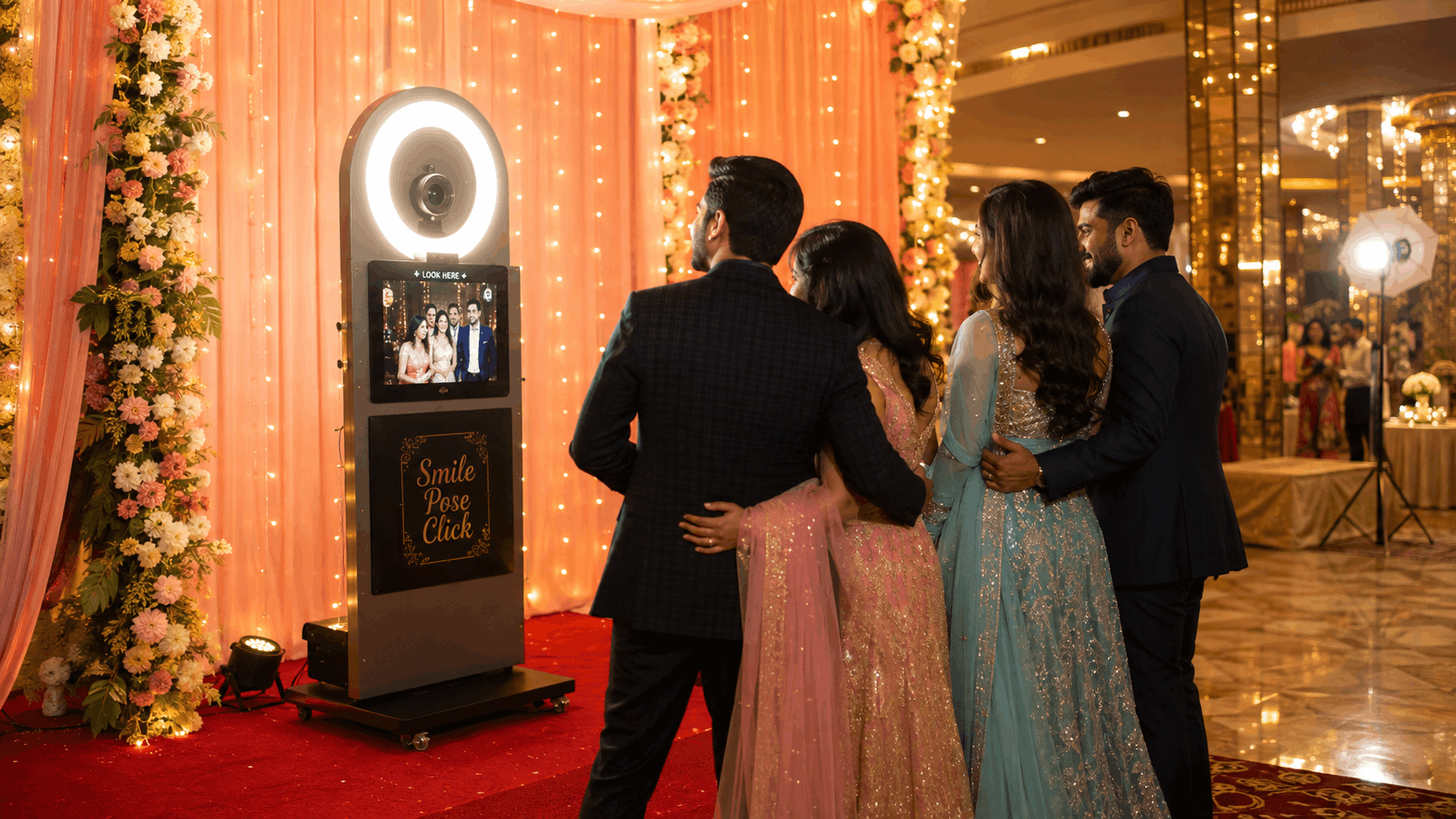
1. Decide What Type of Photo Booth Business You Want
Before buying equipment, decide what kind of photo booth service you actually want to offer.
There are several different options.
Digital Photo Booth
A digital booth takes photos and allows guests to receive them through QR codes, email, text, or another sharing method.
These setups can be relatively simple and portable because you may not need a printer.
They are useful for:
- Birthday parties
- Small weddings
- Corporate events
- Social media events
- College functions
DSLR or Mirrorless Camera Booth
This type of setup uses a dedicated camera instead of relying only on a tablet or phone.
The image quality can be much better, especially when combined with professional lighting.
It is a good choice for premium weddings, corporate events, and clients who care about print quality.
Printing Photo Booth
A printing booth gives guests physical photo strips or prints during the event.
Printed photos can make the booth feel more valuable because guests leave with something they can keep.
However, you also need to think about:
- Printer cost
- Paper and ink
- Backup supplies
- Print speed
- Transport
360 Video Booth
A 360 booth records short videos while a camera moves around the guests.
This type of setup became popular for weddings, parties, and social media events because the videos can look dramatic when slow motion, music, and effects are added.
A 360 booth can command a higher price, but it also requires more space and careful safety management.
Glam Booth
A glam booth usually focuses on clean, flattering portraits with professional lighting and simple backgrounds.
The result often has a premium fashion-style appearance.
This can work well for:
- Weddings
- Luxury parties
- Fashion events
- Brand launches
You do not need to offer every type of booth.
For a beginner, one reliable service is usually better than five services you cannot manage properly.
2. Understand Your Local Market
Before spending money, research what people in your area are already paying for photo booth services.
Search for:
- Photo booth rental near me
- Wedding photo booth
- 360 booth rental
- Birthday photo booth
- Corporate photo booth
Look at local companies and check:
- Their prices
- Their booth designs
- What is included in the package
- Their social media pages
- Customer reviews
- Event photos
You are not doing this to copy them.
You are trying to understand what customers already expect.
Real-Life Example
Imagine that most local companies charge around ₹15,000 for a wedding photo booth package.
If you enter the market at ₹3,000, customers may not automatically think:
“What a great deal!”
They may think:
“Why is this so cheap? Is the quality bad?”
On the other hand, charging ₹25,000 with no portfolio or experience may also make getting your first booking difficult.
Understanding the local market helps you choose realistic pricing.

3. Choose Your Photo Booth Equipment
Your equipment depends on the type of booth you want to operate.
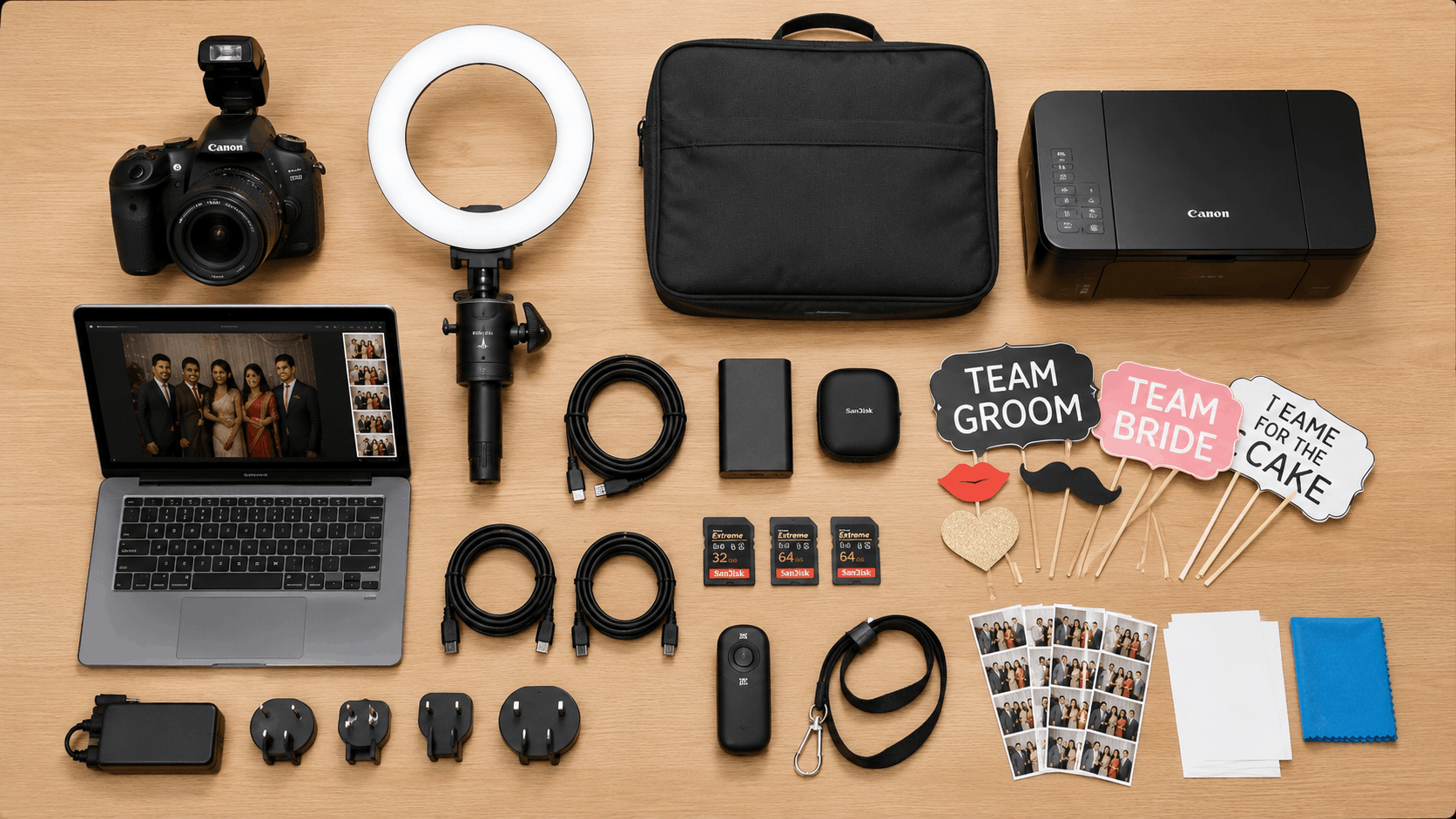
A basic photo booth setup may include:
- Camera or tablet
- Lighting
- Booth stand or enclosure
- Laptop or tablet
- Photo booth software
- Backdrop
- Props
- Printer if offering prints
- Extension cables
- Power backup
- Carrying cases
Let’s look at the important parts separately.
Camera
For a simple digital booth, a modern tablet or smartphone can sometimes be enough.
For better image quality, you may eventually use a DSLR or mirrorless camera.
Do not buy an expensive professional camera only because another booth company uses one.
Your camera should match the type of events you are targeting.
If most of your customers want digital party photos for Instagram, a simple system may work perfectly.
If you are targeting premium weddings, better camera quality becomes more important.
4. Good Lighting Matters More Than Many Beginners Think
A good camera cannot save bad lighting.
Photo booth guests may be standing indoors, in dark wedding halls, or near colorful event lights.
Your booth needs its own reliable lighting.
Popular options can include:
- Ring lights
- LED panels
- Softboxes
- Flash systems
For a beginner, the goal is simple:
Make sure people’s faces look bright, clear, and natural.
Test your lighting before every event.
Do not wait until guests arrive to discover that the faces are overexposed or the background is too dark.
5. Choose Reliable Photo Booth Software
The software is what turns your camera or tablet into an actual photo booth experience.
Depending on the platform, photo booth software may help you:
- Capture photos
- Create GIFs
- Record videos
- Apply overlays
- Add event branding
- Create photo strips
- Send photos digitally
- Generate QR codes
- Manage printing
- Collect guest information
Do not select software based only on the longest feature list.
Reliability is more important.
Imagine working at a wedding with 300 guests and your software crashes every 20 minutes.
It does not matter how many advanced features it has.
Before offering a service to paying clients, test the entire workflow multiple times.
6. Do You Need a Photo Printer?
Not necessarily.
A digital-only booth is easier to transport and usually has fewer things that can go wrong.
But printing can increase the perceived value of your package.
Guests enjoy receiving a physical photo immediately.
If you offer prints, choose equipment designed for regular event use rather than a slow home printer.
Also remember that printing introduces ongoing costs.
You need:
- Paper
- Ink or printing media
- Replacement supplies
- Printer maintenance
Always carry more supplies than you expect to use.
Running out of photo paper in the middle of a wedding does not look professional.

7. Create an Attractive Backdrop
The backdrop becomes part of every photograph.
It should look clean and match the type of event.
You can begin with a few versatile options such as:
- White
- Black
- Gold
- Silver
- Floral
- Sequin
- Minimal neutral design
Later, you can add custom backdrops for weddings, birthdays, or corporate clients.
A simple, professionally presented backdrop is often better than a complicated design that distracts from the people in the photo.
8. Props Can Make the Booth More Fun
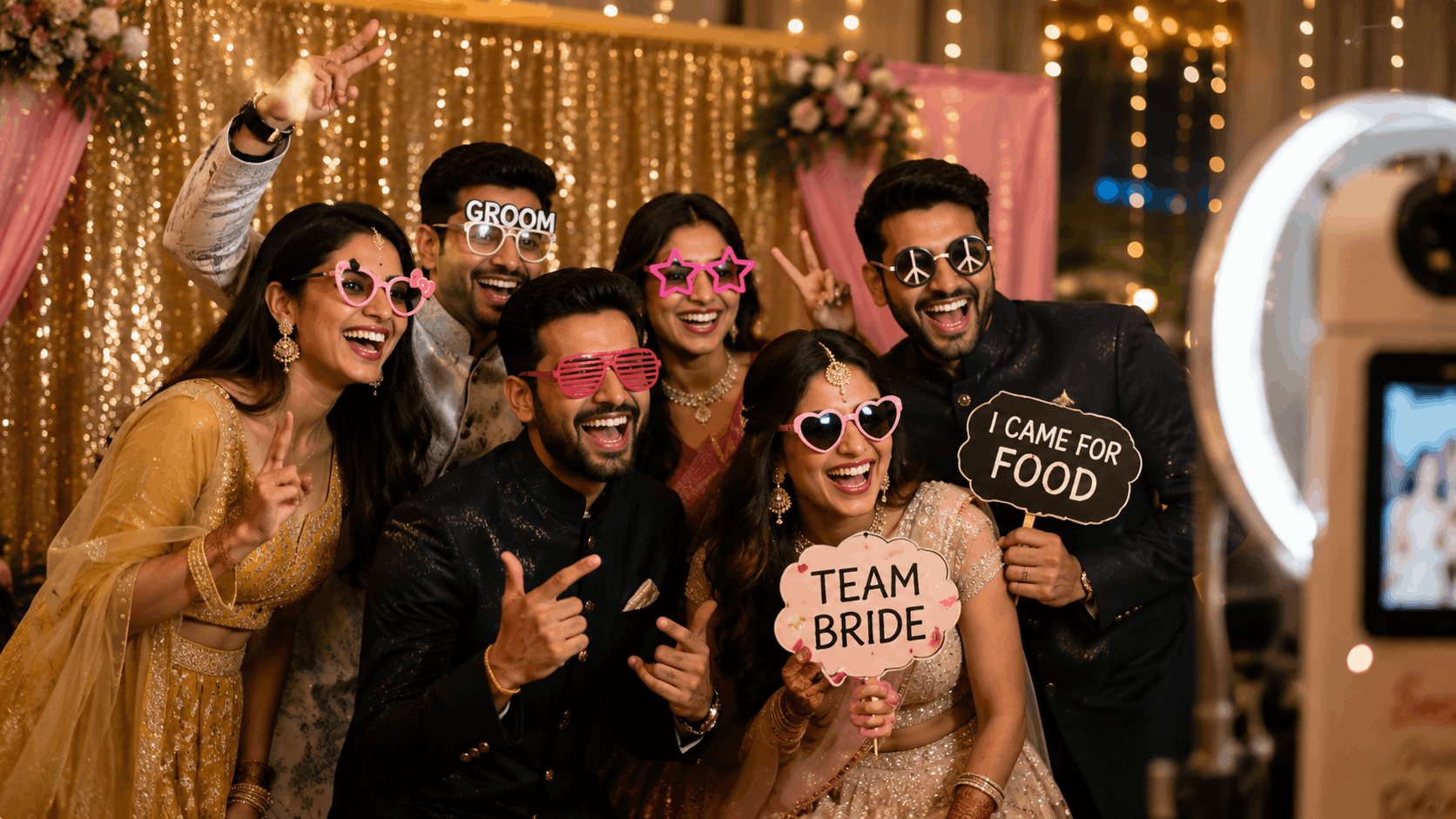
Props are not required, but they can make guests more comfortable and encourage groups to participate.
Common options include:
- Glasses
- Hats
- Funny signs
- Frames
- Wedding props
- Birthday props
- Custom company signs
Avoid buying hundreds of cheap props.
A smaller collection of clean, durable props usually looks better.
You can also offer custom props as an upgrade for corporate events or weddings.
For example:
“Team Bride”
“Team Groom”
or the couple’s names and wedding date.
9. Build a Professional Booth Setup
Your setup should look good from the front and the back.
Guests should not see:
- Loose cables
- Broken stands
- Random bags
- Extension boards everywhere
- Unorganized equipment
Cable management makes a surprisingly big difference.
Use:
- Cable covers
- Velcro straps
- Proper cases
- Clean table covers
Remember that you are working at someone’s important event.
Your booth becomes part of the decoration.
It should look intentional.
10. Calculate Your Real Startup Cost
One of the biggest mistakes new business owners make is calculating only the cost of the main equipment.
Your real startup budget may include:
- Booth hardware
- Camera
- Lighting
- Software subscription
- Printer
- Printing supplies
- Backdrop
- Props
- Transport cases
- Website
- Logo and branding
- Marketing
- Business registration
- Insurance where appropriate
- Transportation
- Spare equipment
The final cost can vary dramatically.
A simple tablet-based digital booth may cost much less than a professional DSLR printing booth or 360 platform.
This is why there is no single correct answer to:
“How much does it cost to start a photo booth business?”
Start with the service you can realistically sell in your market.
Upgrade after the business starts producing revenue.
11. Never Forget Backup Equipment
Event businesses do not get a second chance.
If your cable stops working at home, you can order another one tomorrow.
If it fails during a wedding, you have a problem right now.
Always carry basic backups.
Consider keeping:
- Extra cables
- Chargers
- Batteries
- Extension board
- Memory cards
- Printing supplies
- Internet backup
- Backup lighting
- Basic repair tools
For critical equipment, think about what you would do if it failed in the middle of an event.
Having a backup plan is part of being professional.
12. Create Simple Photo Booth Packages
Do not make customers calculate everything separately.
Create clear packages.
For example:
Basic Package
- 2 hours
- Digital photos
- Standard backdrop
- Basic props
- Online gallery
Wedding Package
- 3 or 4 hours
- Digital photos
- Unlimited sessions
- Custom overlay
- Premium backdrop
- Props
- Attendant
Premium Package
- Longer event coverage
- Prints
- Custom backdrop
- Personalized props
- Guestbook
- Premium design
- Additional attendant
The exact inclusions depend on your business.
The important part is clarity.
Customers should quickly understand what they are paying for.
13. How Much Should You Charge?
Your pricing should cover more than the time you spend standing at the event.
Suppose a client books you for three hours.
You may actually spend:
- One hour preparing
- One hour driving
- One hour setting up
- Three hours operating
- One hour packing
- One hour returning
- Additional time editing or delivering files
A “three-hour booking” may actually consume eight hours of your day.
Your price should also cover:
- Equipment
- Software
- Transport
- Staff
- Printing
- Marketing
- Maintenance
- Taxes
- Profit
Do not copy another company’s price without understanding your own costs.
14. Create a Simple Brand
Your photo booth company needs to look like a real business.
Choose:
- Business name
- Logo
- Brand colors
- Instagram username
- Website domain
Keep the name easy to remember.
Your visual identity should also remain consistent.
If your Instagram profile is black and gold but your website is pink and blue with completely different fonts, the brand can feel disconnected.
You do not need complicated branding.
You need consistency.
15. Build a Website
Social media can bring attention, but a website helps clients understand your service.
A basic photo booth website should include:
- Home page
- Services
- Packages
- Gallery
- About
- Contact or booking form
You can also create pages for different services such as:
- Wedding Photo Booth
- Birthday Photo Booth
- Corporate Photo Booth
- 360 Booth
Show real event photographs whenever possible.
Customers want to see what the experience actually looks like.
16. Create Instagram and Other Social Media Pages
Photo booth businesses are naturally visual.
That makes social media especially useful.
Post:
- Guest reactions
- Booth setup
- Before-and-after setup
- Event videos
- Printed photos
- Custom backdrops
- Behind-the-scenes clips
- Client testimonials
Do not make every post:
“Book now.”
Show people what happens when they book you.
A 10-second video of guests laughing and using the booth can sometimes sell the experience better than a long advertisement.
17. How to Get Your First Customer
Your first booking may be the hardest.
You do not yet have:
- Reviews
- Event photos
- Testimonials
- Portfolio
So create your own small portfolio.
Set up the booth professionally at home or in a studio.
Invite friends or family.
Create examples showing:
- Couples
- Groups
- Individual portraits
- Props
- Prints
- Different backgrounds
You can then use these images for your website and social media.
Another option is offering your booth at a smaller local event for a reduced introductory price in exchange for permission to use photographs and obtain a genuine review.
Just do not stay in “cheap beginner pricing” forever.
18. Build Relationships With Event Professionals
Some of your best customers may never discover you directly.
They may come through:
- Wedding planners
- Photographers
- DJs
- Venues
- Decorators
- Event managers
- Caterers
- Wedding makeup artists
These businesses already speak to people planning events.
Real-Life Example
Suppose a wedding planner manages 30 weddings each year.
If they trust your photo booth service, they may recommend you repeatedly.
That one business relationship can be more valuable than hundreds of random social media followers.
Treat other event professionals well.
Arrive on time.
Do not create problems.
Deliver what you promise.
People recommend businesses that make their own job easier.
19. Google Business Profile Can Help Local Customers Find You
Many customers search directly for:
“Photo booth near me”
or
“Wedding photo booth in [city]”
A properly maintained local business presence can help people discover you when they are already looking for the service.
Keep information accurate.
Add:
- Business name
- Service area
- Contact information
- Event photos
- Business hours where relevant
- Customer reviews
Reviews become especially important.
After a successful event, politely ask satisfied customers to leave honest feedback.
20. Corporate Events Can Be Valuable
Do not think only about weddings.
Corporate events can be an important part of a photo booth business.
Companies may hire booths for:
- Product launches
- Employee parties
- Conferences
- Exhibitions
- Store openings
- Marketing activations
Corporate clients may want additional features such as:
- Company logo overlays
- Custom backgrounds
- Branded photo templates
- Data capture
- Social sharing
- Custom props
These services can sometimes be priced differently from normal private parties because the booth is serving a marketing purpose.
21. Create Clear Booking and Payment Rules
Once a customer is ready to book, everything should be clear.
Your agreement should normally cover important details such as:
- Event date
- Venue
- Start and end time
- Package
- Total price
- Deposit
- Remaining payment
- Setup requirements
- Cancellation terms
- Overtime charges
- Travel charges
Local laws and contract requirements vary, so use appropriate professional guidance when creating legal documents for your business.
Written agreements reduce misunderstandings.
A conversation on the phone is easy to forget.
A clear agreement protects both sides.
22. Take a Booking Deposit
Depending on your local rules and business setup, an agreed booking deposit can help reserve the event date.
Without one, someone may book Saturday evening and cancel a few hours before the event.
You may have already rejected another client for that date.
Your deposit and cancellation policies should be clearly explained before the customer pays.
Never surprise customers with hidden conditions later.
23. Arrive Early
For an event starting at 7:00 PM, do not arrive at 6:55 PM.
You need time to:
- Unload
- Find the setup location
- Connect power
- Test lighting
- Test software
- Test prints
- Organize props
- Speak with the planner
Unexpected things happen.
The venue may change your booth location.
A table may be missing.
The nearest power outlet may not work.
Arriving early gives you time to solve these problems before guests notice.
24. Customer Experience Matters More Than Equipment
You can own a ₹5 lakh setup and still run a bad photo booth business.
Your attendant should:
- Smile
- Help guests
- Keep props organized
- Explain the booth
- Handle technical problems quietly
- Keep the area clean
Guests remember how they felt.
A friendly booth attendant can turn shy guests into active participants.
That means more photographs, happier clients, and better recommendations.
25. Encourage Reviews and Referrals
After a successful event, follow up.
Thank the client.
Send their gallery or final delivery on time.
Then politely ask for a review.
You can say something simple like:
“Thank you for having us at your event. We really enjoyed being part of it. If you were happy with the experience, we would really appreciate an honest review.”
Do not pressure people.
Good reviews accumulate slowly.
Over time, they become a powerful selling tool.
26. Upsell Additional Services
Once your core service is working well, you can increase the average booking value with optional upgrades.
Examples include:
- Extra booth hour
- Premium backdrop
- Custom props
- Guestbook
- Prints
- Additional print copies
- Custom design
- Premium lighting
- Video messages
- 360 booth
- GIF or boomerang features
Upselling does not mean forcing customers to buy unnecessary things.
It means giving them useful options.
27. Track Every Expense and Booking
Once money starts coming in, record it properly.
Track:
- Booking amount
- Deposit
- Remaining payment
- Travel expense
- Printing cost
- Software
- Advertising
- Equipment repairs
- Staff payments
A business can have many bookings and still lose money if the owner does not understand the costs.
Simple Example
You charge:
₹15,000
for one event.
But your costs are:
Transport: ₹1,500
Staff: ₹2,000
Printing: ₹1,500
Advertising allocation: ₹1,000
Other expenses: ₹1,000
That leaves:
₹8,000 before considering taxes, equipment depreciation, and other overheads.
Revenue and profit are not the same thing.
28. Reinvest Some of Your Profit
Your first profit does not need to immediately become a new phone or vacation.
Consider reinvesting some money into the business.
Upgrade things that customers can actually notice.
For example:
- Better backdrop
- Better lighting
- New printer
- Backup equipment
- Better website
- Professional branding
- Better carrying cases
Do not upgrade simply because a new gadget exists.
Upgrade when it improves reliability, quality, or revenue.
Real-Life Beginner Example
Imagine you start with a simple digital photo booth.
You spend money on:
- Tablet
- Booth stand
- Ring light
- Backdrop
- Props
- Software
- Carrying case
You create a clean Instagram page and simple website.
Then you offer your booth at a friend’s birthday event.
You take professional-looking photos and videos of the setup.
With permission, you use them to build your portfolio.
Someone attending the party books you for another birthday.
That client leaves a positive review.
A local event planner later discovers your work and sends you a wedding enquiry.
You gradually add printing.
Later, you offer custom wedding overlays and premium backdrops.
Eventually your business moves from:
One booth → First event → Portfolio → Reviews → Referrals → Regular bookings
That is a much more realistic business path than expecting dozens of customers immediately after buying the equipment.
Common Photo Booth Business Mistakes to Avoid
Buying Too Much Equipment Too Early
You do not need every backdrop, printer, booth type, and accessory on your first day.
Start lean.
Competing Only on Price
Being the cheapest provider makes it difficult to build a profitable business.
Compete on experience, reliability, presentation, and service.
Not Carrying Backups
A ₹500 cable can ruin a ₹20,000 booking if you do not have a spare.
Poor Communication
Reply to enquiries professionally and clearly.
Customers often choose the company that makes booking easiest.
Ignoring Marketing
Buying a booth does not automatically create customers.
Marketing is part of the business.
Being Late
Events run on schedules.
Professionalism matters.
How Much Can a Photo Booth Business Make?
There is no fixed amount.
Your income depends on:
- Local demand
- Number of bookings
- Your prices
- Type of booth
- Operating costs
- Marketing
- Competition
- Season
- Corporate work
- Additional services
For example, if your average profit after direct event expenses were ₹8,000 and you completed eight events during a month, that would represent ₹64,000 before considering additional overheads and taxes.
But this is only an illustration—not a guaranteed income figure.
Some months may be busy.
Other months may be quiet.
Treat the photo booth as a real business rather than expecting guaranteed passive income.
Frequently Asked Questions
Is a photo booth business profitable in 2026?
It can be profitable when there is sufficient local demand and you control your equipment, marketing, staffing, and event costs. Profit depends heavily on pricing and booking volume.
How much money do I need to start a photo booth business?
There is no single amount. A simple digital booth can cost considerably less than a professional DSLR printing booth or 360 video setup. Build your budget around the service you actually plan to sell.
Do I need photography experience?
Not necessarily for a simple automated booth, but understanding lighting, camera settings, and composition can improve the quality of your service.
Can I start a photo booth business from home?
In many cases, the equipment can be stored and managed from home while services are provided at event venues. However, business registration, zoning, tax, insurance, and other local requirements depend on your location.
Do I need a printer?
No. Digital-only booths can send photographs electronically. Printing is an optional service that may allow you to offer higher-value packages.
What events can I target?
Weddings, birthdays, anniversaries, school events, corporate parties, exhibitions, festivals, brand activations, and private celebrations can all be potential markets.
Is a 360 booth better than a normal photo booth?
Not necessarily. They provide different experiences. A 360 booth is video-focused and social-media friendly, while traditional booths can offer photography and physical prints.
How do I get my first photo booth customer?
Create a professional demo setup, build a portfolio, promote locally, connect with event vendors, and consider an introductory booking that gives you real event material and an honest customer review.
Conclusion
Starting a photo booth business in 2026 does not require building a huge company from the beginning.
Start with one service you can deliver extremely well.
Choose reliable equipment, learn how everything works, create clear packages, and build a professional portfolio. Then focus on finding customers through social media, local search, event planners, photographers, venues, and referrals.
Remember that clients are not really paying for a camera and backdrop.
They are paying for an experience.
They want their guests to have fun. They want good photographs. They want the booth ready on time, and they do not want to worry about technical problems during their event.
If you can provide that experience consistently, customers are more likely to recommend you.
Your first few bookings may take time, but each event can create photographs, videos, reviews, referrals, and relationships that help you win the next booking.
Start simple, learn from every event, improve your service, and let the business grow with your experience.